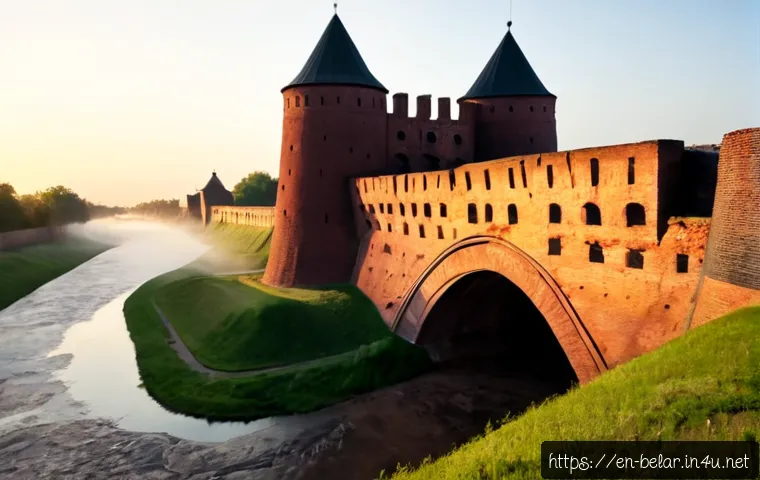
Brest Fortress is a nineteenth-century Russian imperial fortification in Brest, Belarus, best known internationally for the German attack on 22 June 1941 and the defenders’ resistance under severe conditions.
It is worth visiting for travelers who want to connect World War II history with the site’s earlier role in imperial defense, the 1918 Treaty of Brest-Litovsk, and the conflicts of 1939.
A self-guided visit can work for readers who prepare in advance, while a local guide may add useful context to a complex and emotionally significant memorial landscape.
The memorial complex combines ruins, monuments, and museum spaces, so it is more than a single battlefield stop. Travelers with limited time should decide whether their priority is memorial grounds, museum interpretation, or a broader regional history itinerary.
Check current museum tickets, guide languages, transport options, and travel requirements before making plans.
At a Glance
- Brest Fortress was built by the Russian Empire mainly during the 1830s and 1840s near the Bug and Mukhavets rivers.
- It was the location where the Treaty of Brest-Litovsk was signed in March 1918 and became a major wartime site in 1939 and 1941.
- The Brest Hero-Fortress Memorial Complex, opened in 1971, preserves the site as a place of remembrance, ruins, monuments, and museum interpretation.
| Visit format | Cost range | Best for | Historical context | Transport and accessibility |
|---|---|---|---|---|
| Self-guided visit | Current museum ticket costs should be checked before arrival. | Independent travelers with time to read and reflect. | Good if you research the 1830s–1941 timeline in advance. | You arrange local transport and confirm which areas are open. |
| Local guide | Guide fees and language options vary. | First-time visitors who want a clearer explanation of the memorial. | Helpful for separating the 1918, 1939, and 1941 stories. | Ask about meeting points, walking demands, and museum access. |
| Multi-day history tour | Package inclusions and conditions vary by operator. | Travelers building a wider Eastern Europe history itinerary. | May place Brest within a broader regional framework. | Confirm transport, accommodation, border requirements, and schedule details. |
Why Brest Fortress Matters in European History
The short answer: a frontier fortification, treaty location, battlefield, and memorial
Brest Fortress matters because its history has several distinct layers. It began as a Russian imperial military project in the nineteenth century. It later became the site of the Treaty of Brest-Litovsk in March 1918, was involved in fighting during Germany’s invasion of Poland in September 1939, and became one of the first Soviet military positions attacked when Germany invaded the Soviet Union on 22 June 1941.
For many visitors, the 1941 defense is the central reason to come. Yet the fortress is easier to understand when it is treated as a place shaped by changing borders, military planning, diplomacy, war, and commemoration rather than as a site with only one historical meaning.
Why its history cannot be reduced to one day in 1941
The German attack of 22 June 1941 gave Brest Fortress its strongest public association. The defenders resisted under severe conditions, but the duration and details of resistance varied among individual units and isolated defenders. This is an important caution when reading short summaries that present one simple, uniform account of the siege.
A meaningful visit keeps the sequence clear: imperial construction, the 1918 treaty, the conflict of 1939, and the 1941 defense. That timeline prevents the memorial’s powerful symbolism from replacing the wider history of the region.
From Imperial Stronghold to Brest-Litovsk Treaty Site
Why the Russian Empire built the fortification
The Russian Empire built Brest Fortress in the nineteenth century, largely during the 1830s and 1840s. Its position around the confluence of the Bug and Mukhavets rivers made it a strategically important location near the historic city of Brest-Litovsk. The project was part of an imperial military landscape, not originally a World War II memorial.
When visiting, look first at the fortress as a physical military complex. This perspective helps explain why later armies and governments attached significance to the site.
The relocation of the older town and the fortress layout
The earlier town was relocated to make room for the new military complex. That fact is easy to overlook, but it changes how the site should be read: the fortress did not simply appear beside an unchanged historic settlement. Its construction reshaped the local urban setting.
Independent visitors may find it useful to begin with a map or an orientation display, if available on their travel date. A guide can be particularly useful here because the relationship between the former town, the rivers, and the fortification is not always obvious from a quick walk.
The 1918 treaty and its wider historical importance
In March 1918, the Treaty of Brest-Litovsk was signed at the fortress. This diplomatic event gives the site a significance beyond military architecture and battlefield history. It is one reason Brest Fortress belongs on an itinerary for travelers interested in the political history of Europe as well as military history.
Do not assume that a memorial visit automatically explains the treaty in depth. Before booking museum tickets or a guided history tour, check whether current interpretation includes the 1918 period and whether the guide can cover it in your preferred language.
The Wars of 1939–1941 and the Defense of the Fortress
Brest during the opening of World War II
In September 1939, the fortress was involved in fighting during Germany’s invasion of Poland. Soviet forces later took control of Brest. This transition is essential context for understanding why the fortress was a Soviet military position when Germany attacked the Soviet Union less than two years later.
Travelers should avoid treating these events as disconnected episodes. The 1939 conflict and the subsequent Soviet control form the immediate background to 1941.
The German attack of 22 June 1941
Germany attacked the Soviet Union on 22 June 1941, and Brest Fortress was among the first Soviet positions hit. The defense became a major symbol of Soviet resistance. In 1965, the Soviet Union awarded Brest Fortress the title “Hero Fortress.”
The title is important for understanding the site’s public identity, but it should not be read as a complete account of every military event or every individual experience. The historical record includes different resistance pockets, changing conditions, and varying lengths of survival.
What “resistance” means in accounts of the siege
Accounts of Brest Fortress often emphasize extraordinary resistance, and that central fact is why the site is remembered so strongly. At the same time, careful readers should distinguish between the overall defense and the experiences of specific units or isolated defenders. The exact duration of resistance was not identical in every part of the fortress.
A good museum visit or guided tour should make room for both ideas: the significance of the defense and the complexity of reconstructing events under wartime conditions.
Reading the Memorial Complex Without Missing the Context
Ruins, monuments, and museum interpretation
The Brest Hero-Fortress Memorial Complex opened in 1971. It includes monuments, ruins, and museum spaces. For a limited-time visit, prioritize the memorial grounds first, then preserved fortifications and museum interpretation if access and time allow.
The ruins give a physical sense of the fortress, while museums can help visitors place the visible landscape within its nineteenth-century, 1918, 1939, and 1941 contexts. Check current opening hours, photography rules, exhibit access, and ticket availability before travel.
How Soviet commemoration shaped the site’s public meaning
The 1965 Hero Fortress title and the opening of the memorial complex in 1971 show how Soviet commemoration shaped Brest Fortress into a major public symbol. This does not erase the earlier layers of history. Instead, it explains why the 1941 defense is often the dominant lens through which visitors encounter the site.
For the fullest understanding, read the memorial as both a place of remembrance and a historical source. Ask what period is being emphasized, what came before it, and which parts of the fortress’s past need additional explanation.
Respectful behavior at a war memorial
Brest Fortress is a memorial site as well as a visitor attraction. Keep conversation and photography considerate, follow posted rules, and avoid treating damaged structures or commemorative spaces as casual backdrops. If visiting with children or students, explain beforehand that the site concerns warfare, loss, and remembrance.
Planning a Visit: Self-Guided, Local Guide, or Organized Tour?
Comparison criteria: cost, language, transport, historical depth, and available time
A self-guided visit is suitable if you are comfortable preparing with a reliable timeline and can confirm current museum arrangements yourself. It gives flexibility, but you will need to manage transport planning, tickets, access questions, and interpretation.
A local guide can add value if you want the story connected across the fortress layout and its different historical periods. Ask whether the guide offers your language, whether museum entry is included, and whether the route focuses mainly on 1941 or also covers the nineteenth century, 1918, and 1939.
An organized regional history tour may suit travelers who prefer coordinated transport and want Brest included in a larger itinerary. Before committing, confirm the actual time at the fortress rather than assuming that a multi-stop tour allows a full museum and memorial visit.
When a guide adds meaningful value
A guide is most useful when your main question is not simply “Where is the memorial?” but “How do these events connect?” The site’s layered chronology can be difficult to grasp during a short stop. Guided interpretation may also help visitors understand the distinction between preserved structures, commemorative spaces, and museum displays.
For military-history readers, ask whether the guide can discuss the varying accounts of resistance without reducing the defense to a single simplified narrative.
Practical checks before purchasing tickets or booking transport
Verify current admission prices, opening hours, guided-tour schedules, language availability, photography rules, and ticket availability. Also confirm whether specific buildings, exhibits, or museum rooms will be accessible on your intended date. Border, visa, transport, and travel-safety requirements for Belarus can change, so these must be checked through current official or appropriate travel information before departure.
Choosing a Visit Format and Historical Focus
Best option for first-time visitors, military-history readers, and short-stop travelers
First-time visitors may benefit from a local guide if they want a structured explanation of the fortress’s many historical layers. Military-history readers may prefer more time for museum interpretation and the preserved fortifications, while also keeping the 1939 background in view. Short-stop travelers should focus on the memorial grounds and use a concise historical timeline to avoid leaving with only a partial impression.
There is no universally best format. The right choice depends on whether your priority is independence, deeper context, language support, transport convenience, or time efficiency.
A final checklist for building Brest Fortress into an Eastern Europe itinerary
Decide which historical period matters most to you. Confirm current museum access and transport before finalizing the route. Allow room for quiet time at the memorial rather than treating it as a quick photo stop. If you are comparing guided tours, look for clear information on language, meeting arrangements, inclusions, and the amount of time actually spent at Brest Fortress.
Choosing a Visit Format and Comparing Options
Before booking, compare these points:
- Historical focus: Does the visit explain the nineteenth-century fortress, 1918 treaty, 1939 fighting, and 1941 defense?
- Language: Is museum information or guide commentary available in a language you understand?
- Time: Does the schedule allow for both memorial grounds and museum spaces?
- Access: Which buildings, exhibits, or areas are confirmed open on your travel date?
- Logistics: Have you checked transport, tickets, border rules, and travel requirements?
Compare current museum tickets, guide languages, and transport options on the relevant official or booking pages before making a reservation.
Conclusion
Brest Fortress is meaningful because it brings several major historical periods into one place. Its 1941 defense remains central, but the nineteenth-century construction, the Treaty of Brest-Litovsk, and the events of 1939 provide necessary context. A careful visit balances the emotional force of the memorial with attention to the full timeline. Whether you go independently or with a guide, preparation will make the experience more informative and respectful.
Useful Information to Know
First: the fortress was built mainly in the 1830s and 1840s. Second: the Treaty of Brest-Litovsk was signed there in March 1918. Third: the Hero Fortress title was awarded in 1965, and the memorial complex opened in 1971. Finally: the site is best understood as both a historical landmark and a place of commemoration.
Important Notes
Current admission prices, opening times, guide schedules, photography rules, and exhibit access require confirmation. The exact details and duration of resistance varied across individual units and isolated defenders during June and July 1941. Travelers must also verify current visa, border, transport, and travel-safety requirements for Belarus through up-to-date sources.
Frequently Asked Questions
Q1. Is Brest Fortress worth visiting for travelers interested in World War II history?
A1. Yes, especially for travelers who want to understand the opening of the German invasion of the Soviet Union on 22 June 1941 and the symbolic importance of the defense. The visit is stronger when you also consider the fortress’s nineteenth-century origins, the 1918 treaty, and the events of 1939.
Q2. Do you need a guided tour to understand Brest Fortress, or is a self-guided visit enough?
A2. A self-guided visit can be enough if you prepare with a clear timeline and confirm current museum access. A guide can be valuable if you want help connecting the site’s military, diplomatic, and commemorative layers or need interpretation in your preferred language.
Q3. How much time should visitors allow for the memorial complex and museum areas?
A3. The right amount of time depends on whether you plan to see only the memorial grounds or also visit museum spaces and preserved fortifications. Check current opening hours, access conditions, and tour schedules before deciding how to structure your day.